Novarc Technologies
(Vancouver, BC, Canada) November 2021 - Present
I originally joined Novarc as the VP of Innovation with a really exciting goal: to take our success in pipe welding and expand it into new types of robotic systems. Novarc was already a leader in the field, so my job was to build a scalable foundation that could handle all sorts of different industrial setups. As our team’s impact grew and we started reaching these milestones, I stepped into my current role as Deputy CTO.
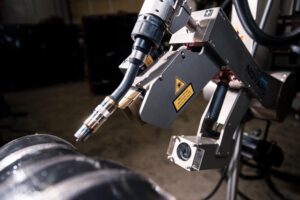
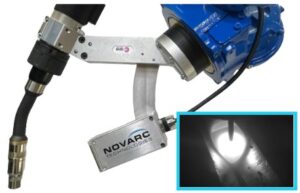
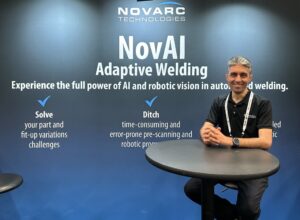
One of my favorite projects was leading the development of NovAI. It’s our robotic vision and perception platform that helps machines ‘see’ and adapt to the welding task in real-time. By using advanced sensors and data, we enabled the robots to handle things like seam tracking and gap compensation automatically. This made it much easier for our customers in the manufacturing sector to automate complex tasks and see a real return on their investment.
Beyond the engineering, I focused on the business side of innovation. I helped our team move from building prototypes to creating reliable, market-ready products. I’ve also been heavily involved in our company’s growth strategy, working on everything from Series A and B fundraising to building strategic partnerships. It’s been about making sure our long-term vision is backed by the right talent and capital.
Applus SKC
(Vancouver, BC, Canada) February 2015 - November 2021
At SKC Engineering (part of the global Applus+ group), I had the chance to lead some really exciting work in advanced welding engineering. We acted as a sort of ‘innovation hub,’ helping clients across North America ensure their industrial infrastructure, like transportation systems and energy facilities, was built to last. It was a great place to combine high-level engineering with global service delivery.
My goal when I joined was to take all that deep welding science and turn it into practical, repeatable systems. Instead of looking at every project as a one-off task, I focused on building a ‘knowledge engine’ that could help companies make smart manufacturing decisions quickly and consistently. It was all about bridging the gap between the lab and the actual workspace.
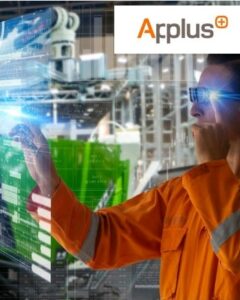
I led the team in creating digital platforms that use a bit of ‘tech magic’, combining traditional physics with machine learning. This helped us move away from slow, manual studies toward automated systems. A great example was the DeepWeld project, where we built tools to help operators predict things like heat distortion and ensure everything was structurally sound before the first spark even flew.
Beyond the tech, I was really focused on the responsibility side of things. I wanted to make sure our tools gave leaders and operators the clear info they needed to make safe, confident decisions. For me, it was about creating a system where safety and reliability were built into the very foundation of how the company operated.
This experience really sparked a ‘lightbulb moment’ for me. I realized that the future isn’t just in the tools, but in embedding that advanced perception directly into the robots and machines themselves. That’s exactly what led me to my current chapter: bringing smart automation and robotics to life in a way that changes how the industry works.

Life Prediction Technologies Inc & University of Ottawa
Industrial PDA with Life Prediction Technologies Incorporation (LPTi) (Ottawa, ON, Canada) May 2011 - January 2015
Goldak Technologies Inc & Carleton University
P/T while doing Ph.D., my supervisor's company (Ottawa, ON, Canada) September 2007 - April 2011